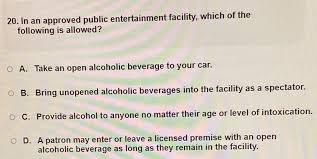
Walking into a busy nightclub, a lively theater, or a massive concert hall feels exciting. The lights, the music, the crowd—it’s all part of the experience. But behind the scenes, there is a strict set of safety and legal rules that venue owners and event organizers must follow. If you have ever wondered, “in an approved public entertainment facility which of the following is allowed?” —you are not alone.
This question appears on licensing exams, safety training modules, and even in the minds of business owners who want to avoid fines or shutdowns. The answer isn’t always obvious. Is open flame allowed? Can patrons bring their own alcohol? Are dancing and live music always permitted?
By the end of this guide, you will clearly understand what activities, behaviors, and operations are legally allowed inside an approved public entertainment facility. We’ll break down real-world examples, safety codes, and common myths. Let’s dive in.
What Does “Approved Public Entertainment Facility” Actually Mean?
Before answering “in an approved public entertainment facility which of the following is allowed,” we need to define the term. An approved public entertainment facility is a venue that has received official permission from local authorities—such as a city council, fire marshal, or licensing board—to host entertainment activities.
These facilities include:
- Nightclubs and dance halls
- Theaters and cinemas
- Concert venues and arenas
- Sports stadiums (when used for concerts or shows)
- Amusement arcades and family entertainment centers
“Approved” means the venue has met specific requirements for:
- Fire safety systems (sprinklers, extinguishers, emergency exits)
- Occupancy load limits
- Accessibility for people with disabilities
- Noise control measures
- Alcohol service permits (if applicable)
Without approval, a facility cannot legally host public entertainment. Operating without approval can lead to heavy fines, closure, or even criminal charges.
The Core Question: In an Approved Public Entertainment Facility Which of the Following Is Allowed?
Let’s tackle the main question directly. Imagine you are a venue manager, a security officer, or an event planner. You are looking at a list of activities and asking: “in an approved public entertainment facility which of the following is allowed?”
Below is a breakdown of common scenarios. For each, we will state whether it is allowed or not allowed under standard regulations (based on typical U.S. and international fire/liquor/safety codes).
1. Serving Alcoholic Beverages After Midnight
Allowed? It depends.
In many jurisdictions, approved public entertainment facilities can serve alcohol until a specific cutoff time—often 1:00 AM or 2:00 AM. However, some local laws require last call by midnight. The key is what the facility’s specific liquor license says. If the license permits late-night service, then yes, it is allowed. If not, no.
Tip: Always check your local alcohol control board’s rules. Late-night service often requires additional security measures.
2. Exceeding the Posted Occupancy Limit
Allowed? Absolutely not.
This is one of the most strictly enforced rules. Every approved public entertainment facility has a maximum occupancy certificate posted near the entrance. Exceeding that number—even by five people—is illegal. It violates fire codes and puts lives at risk. In an approved public entertainment facility, exceeding capacity is never allowed.
3. Using Pyrotechnics or Open Flames During a Show
Allowed? Only with special permits.
Small indoor venues usually ban open flames. Larger arenas may allow pyrotechnics if they have a fire safety plan, a licensed operator, and a fire marshal on-site. However, for most standard facilities, open candles, sparklers, or flame effects are prohibited. The risk of fire is too high.
4. Dancing in Any Area of the Facility
Allowed? Yes, within designated spaces.
Dancing is a primary form of entertainment in many venues. However, some facilities restrict dancing to specific zones—such as a dance floor—and prohibit it near bars, stairs, or emergency exits. In an approved public entertainment facility, dancing is allowed as long as it does not block aisles or exits.
5. Bringing Outside Food and Drinks
Allowed? Usually no.
Most approved public entertainment facilities have concessions or bars. They prohibit outside food and beverages to protect their revenue and control intoxication. Exceptions exist for medical reasons (e.g., a person with diabetes bringing a snack) or for baby formula. Otherwise, outside drinks are not allowed.
6. Smoking Inside the Venue
Allowed? No, in almost all jurisdictions.
Smoking indoors in public entertainment facilities has been banned for decades in most countries. Some venues have outdoor smoking patios. But inside the main entertainment area? Not allowed. This includes cigarettes, e-cigarettes, and vaping devices.
7. Live Animals as Part of a Performance
Allowed? Only with explicit approval.
If a facility wants to host a circus, animal act, or pet show, they need additional permits. Animal welfare laws, health codes, and safety regulations apply. Without special approval, live animals are not allowed inside public entertainment facilities.
Fire Safety Rules: What’s Allowed and What’s Not
Fire marshals have strong authority over approved public entertainment facilities. Let’s look at specific fire-safety-related questions.
Are Extension Cords Allowed?
Allowed? Temporarily, but with restrictions.
Permanent wiring is required for fixed installations. However, heavy-duty extension cords may be allowed for temporary events (e.g., a guest DJ’s equipment). Household-style extension cords are never allowed because they overheat.
Are Decorations Like Fake Cobwebs or Banners Allowed?
Allowed? Yes, if flame-resistant.
All decorative materials must be labeled as flame-retardant or treated with a fire-resistant spray. Paper, cardboard, or untreated fabric decorations are typically not allowed.
Are Locked Emergency Exits Allowed?
Allowed? Never.
Emergency exits must remain unlocked from the inside at all times during public hours. Locking exits (even to prevent theft) is a serious violation. In an approved public entertainment facility, free egress is always allowed and required.
Real-Life Use Case: Planning a Private Party in an Approved Facility
Let’s make this practical. Sarah is renting a small approved public entertainment facility (a lounge with a stage) for her friend’s birthday party. She asks: “in an approved public entertainment facility which of the following is allowed?”
Her checklist:
- Bringing her own DJ deck? ✅ Allowed (but she must coordinate with venue staff).
- Decorating with helium balloons? ✅ Allowed (balloons are fine, but not metallic ones if electrical panels are nearby).
- Serving homemade punch? ❌ Not allowed. The venue has a liquor license and requires all drinks to be sold by their bar.
- Letting guests smoke hookah inside? ❌ Not allowed. Hookah requires a separate tobacco license and ventilation system.
- Having a raffle with cash prizes? ⚠️ Maybe allowed, but gambling laws vary. She needs to check local regulations.
By understanding the rules, Sarah avoids fines and keeps her party safe.
Common Misconceptions About Public Entertainment Facilities
Many people assume that once a facility is “approved,” anything goes. That’s false. Here are three myths busted.
Myth 1: “If the venue has a stage, live music is always allowed.”
Reality: Live music requires a sound permit in many cities. Even in an approved facility, noise complaints from neighbors can shut down a show early.
Myth 2: “Minors can enter any approved facility if accompanied by an adult.”
Reality: Many facilities have age restrictions (e.g., 21+ after 9 PM). Entertainment licenses often prohibit minors in areas serving alcohol after certain hours.
Myth 3: “Security guards can physically remove anyone they want.”
Reality: Security can escort a person out for violating rules, but they cannot use excessive force. Citizen’s arrest powers are limited. Only police have full arrest authority.
How to Check If a Specific Activity Is Allowed in Your Local Facility
Rules vary by city, state, and country. To get a definitive answer for “in an approved public entertainment facility which of the following is allowed” in your area, follow these steps:
- Review the facility’s operating license. It lists approved activities.
- Ask the fire marshal’s office. They provide a written interpretation of fire codes.
- Check local ordinances online. Search for “entertainment license + your city.”
- Consult a lawyer if you plan a non-standard event (e.g., live reptiles, mock fights, or laser shows).
The Role of Occupancy Load in Allowed Activities
Occupancy load is the maximum number of people allowed inside at once. This number affects everything that is allowed. For example:
| Occupancy Load | What’s Typically Allowed |
|---|---|
| Under 50 people | Simple gatherings, acoustic music, no dance floor required |
| 50–200 people | DJ or small band, dancing allowed, one bar |
| 200–500 people | Live concerts, multiple bars, dedicated security team |
| Over 500 people | Pyrotechnics (with permit), crowd managers, advanced fire alarms |
If a facility tries to host a 500-person concert with a 200-person occupancy limit, the event is illegal. Nothing else matters.
What Happens If You Violate These Rules?
Violations can lead to:
- Fines: From 500to10,000 per violation.
- License suspension: The facility loses its “approved” status.
- Civil liability: If someone gets hurt, the venue owner pays.
- Criminal charges: For severe violations (e.g., locked exits during a fire).
Real example: In 2016, a nightclub in Oakland, California (Ghost Ship) burned down because it was not an approved facility. Flammable materials, no sprinklers, and blocked exits killed 36 people. That tragedy changed how “approved” is defined worldwide.
FAQ: Quick Answers to Common Questions
Q1: In an approved public entertainment facility which of the following is allowed: drinking on the dance floor?
Answer: It depends on local liquor laws. Some facilities allow drinks on the dance floor; others require drinks to stay in designated “drinking zones” (e.g., tables or bars). Check with the venue.
Q2: Are selfie sticks and tripods allowed inside?
Answer: Usually yes for personal use, but professional cameras with large tripods may require a media pass. Facility managers can ban anything that blocks walkways.
Q3: Is moshing or crowd surfing allowed?
Answer: Most approved facilities prohibit moshing and crowd surfing in their terms of entry. If injuries occur, the facility can be held liable. Security will usually remove aggressive participants.
Q4: Can a facility refuse entry to someone wearing gang colors or offensive T-shirts?
Answer: Yes. Private entertainment facilities have the right to enforce a dress code, as long as it does not discriminate based on race, religion, or other protected classes.
Strong Conclusion: Know the Rules, Stay Safe, and Enjoy Responsibly
Understanding what is and isn’t allowed inside an approved public entertainment facility protects everyone—owners, staff, and guests. So, let’s return one final time to our central question: in an approved public entertainment facility which of the following is allowed?
The answer is clear: Activities that comply with fire safety codes, occupancy limits, liquor laws, and local permits. Dancing is allowed. Live music is allowed. Selling alcohol (within hours) is allowed. But exceeding capacity, blocking exits, using open flames without a permit, or allowing smoking indoors—those are never allowed.
Whether you’re a venue owner, an event promoter, or just someone who loves a night out, respect the rules. They exist for a reason. Approved public entertainment facilities are wonderful places for fun, art, and community—but only when everyone plays by the rules.
Now you have the knowledge. Share it. Use it. And next time you walk into a club or theater, take a moment to appreciate the safety systems working quietly behind the lights and music.